
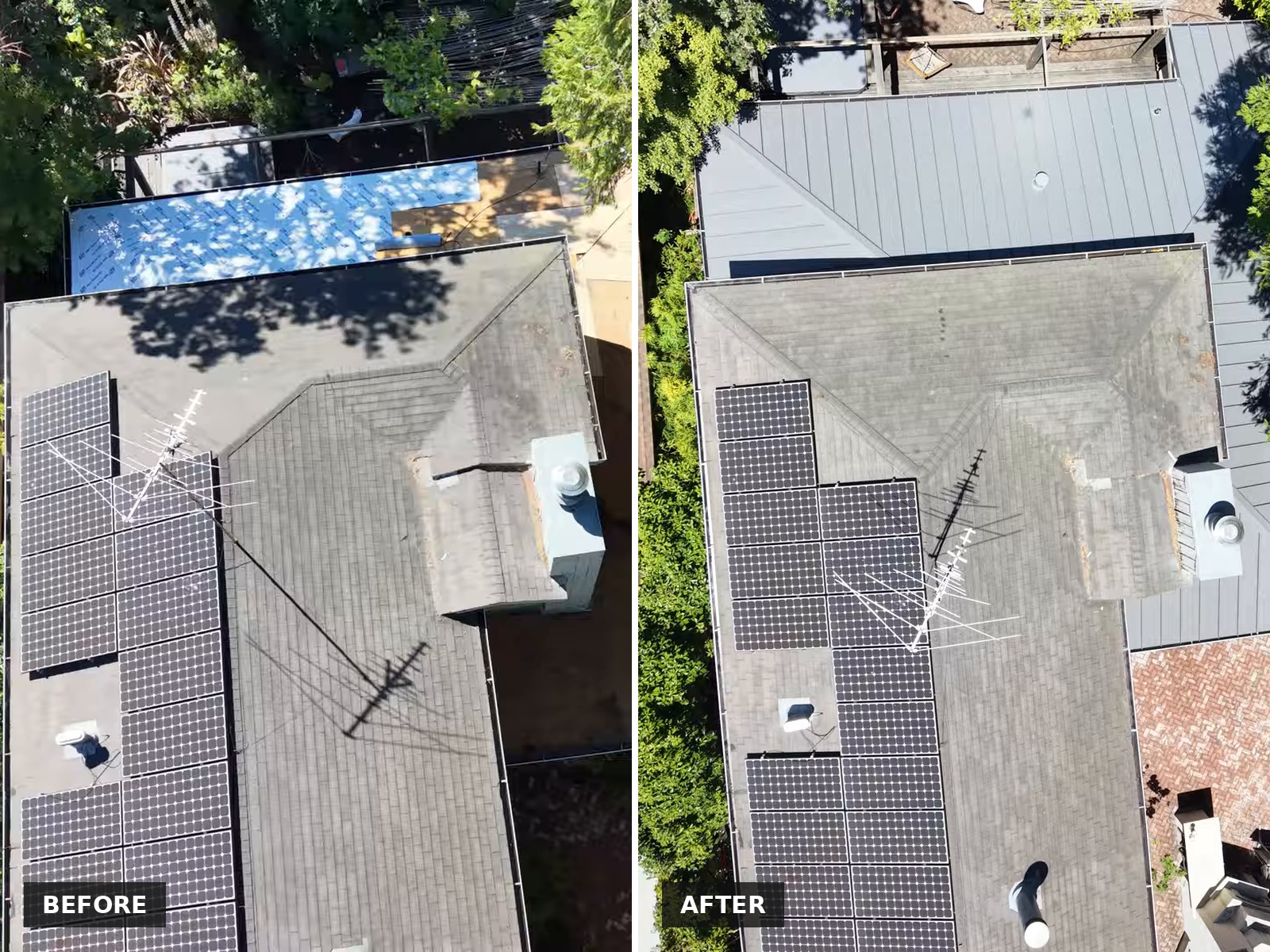

This metal roof in Menlo Park started with a blue tarp. On June 27, a drone flew over the house and recorded that tarp stretched across the back of the roof. On July 3, the same drone flew the same route and found charcoal standing seam panels running clean from ridge to edge.
Six days separate those two flights. Here is what happened in between, and why Skybleu chose metal for this part of the house.
What the drone saw first
The home has two roof levels. The main roof, over the upper floor, is asphalt shingle with a solar array. Below it, lower roof sections wrap the back and one side of the house. Those lower sections have a much gentler slope.
That gentle slope was the problem. In the before footage, a blue tarp covers the rear section, the kind of temporary fix homeowners reach for when a roof starts letting water through. A tarp buys time. However, it will not survive a Bay Area winter, and it tells every neighbor the roof needs work.
Why a metal roof made sense in Menlo Park
Skybleu left the main roof alone. The shingles and solar panels up top were not the issue, so replacing them would have added cost without solving anything. Instead, the crew replaced only the lower sections, where shingles struggle most.
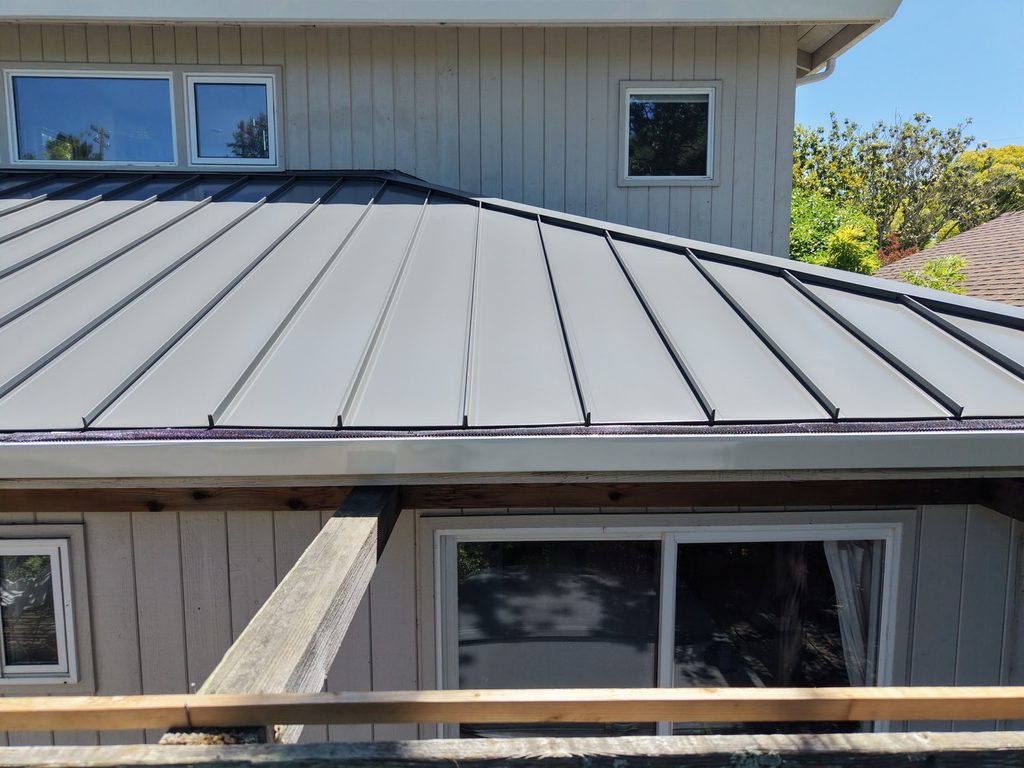
This is the part many homeowners miss. A roof does not have to be one material. When one section keeps failing, the right answer is often to change the material on that section, not to redo the whole house.
Metal roof vs shingles on a low-slope roof
Asphalt shingles work by overlapping. Water runs from one shingle onto the next, and gravity does most of the work. On a steep roof, that system is reliable. On a shallow one, water moves slowly, wind can push it back up under the edges, and leaks follow.
Standing seam metal works differently. Each panel runs in one piece from the top of the section to the edge, so there are no horizontal joints for water to sit on. The seams between panels rise above the surface, and the fasteners hide beneath them instead of piercing the face of the roof. As a result, a shallow pitch that defeats shingles is well within what standing seam is built for.
Charcoal, flat, and quiet
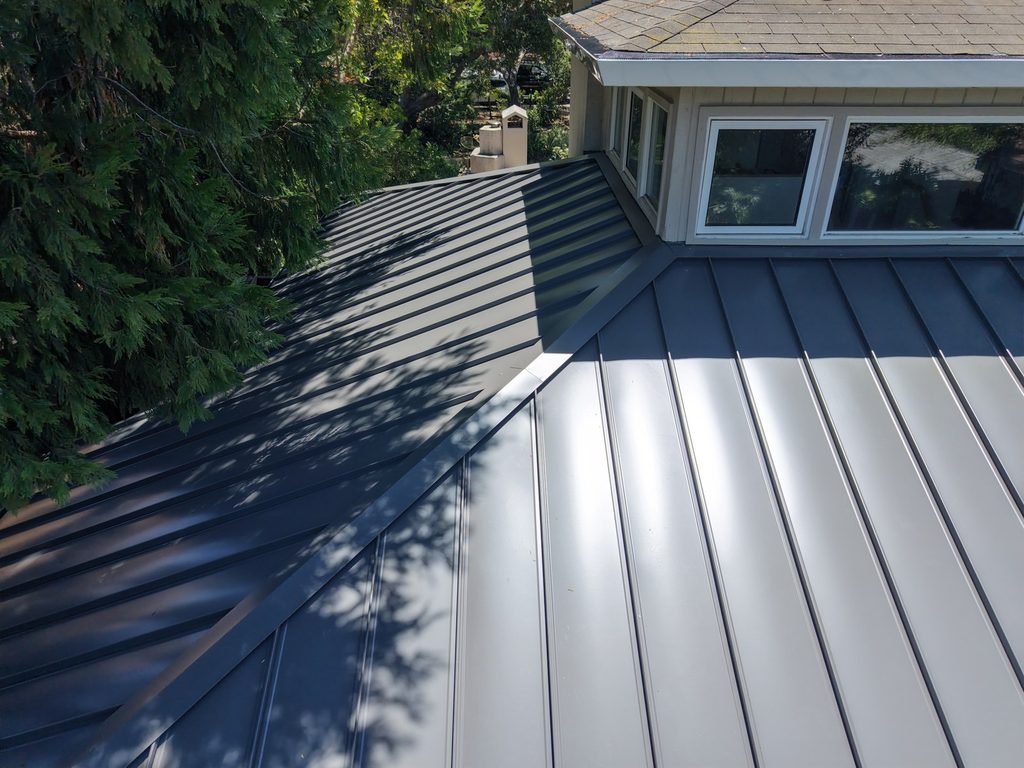
The owners chose charcoal with flat panels, meaning no ribs or stripes between the seams. The finish reads as a single dark plane crossed by thin vertical lines. It sits comfortably under the grey shingle roof above instead of competing with it.
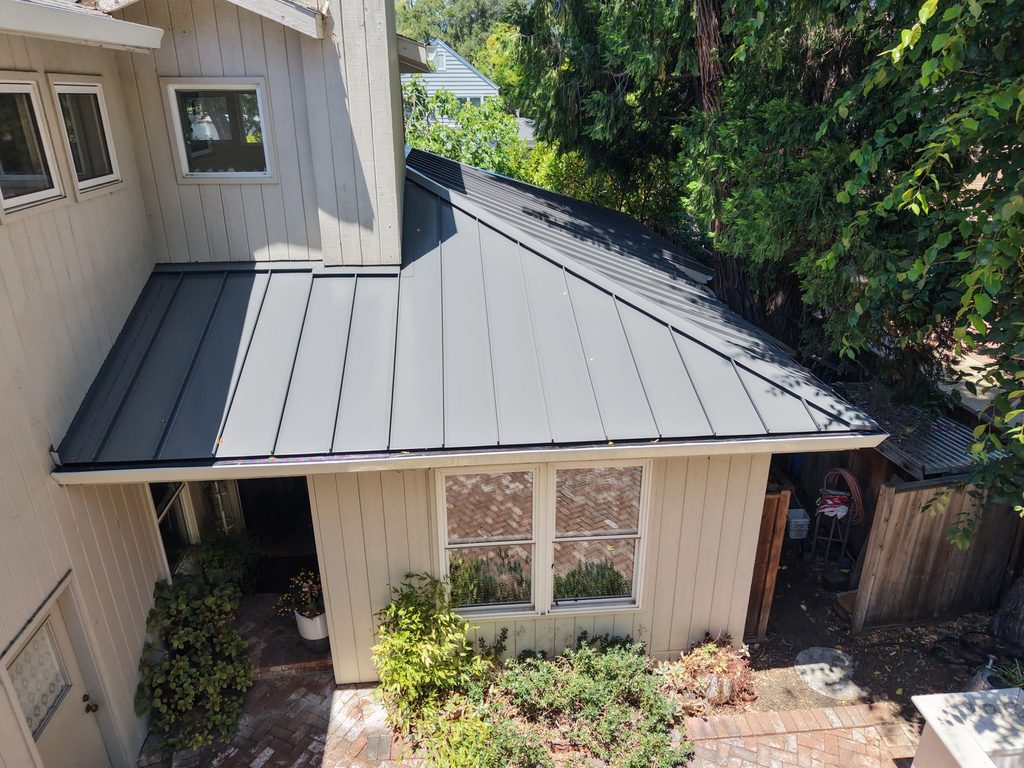
Meanwhile, the color does practical work too. Charcoal hides dust, pollen, and the leaves that drop from the mature trees around this property. It also holds its look for years, because pre-finished metal panels carry a factory-applied coating rather than paint added on site.
Is a metal roof worth it?
For the right section of the right house, yes. A few reasons stand out:
- Lifespan. A standing seam roof commonly outlasts asphalt shingles by decades, which means one installation instead of two or three.
- Fire resistance. Metal does not burn, and that matters in a region that now plans around wildfire season.
- Low maintenance. There are no shingles to lift, crack, or shed granules. Occasional cleaning keeps it in shape.
- Solar-friendly. If the owners ever expand their array, panels can clamp directly onto the standing seams without drilling through the roof.
The trade-off is upfront cost, since metal costs more than shingles. Still, on a section that already failed once, paying for the right material once usually beats paying for the wrong one twice.
Before the rain comes
Bay Area rain season usually starts in October or November. Any roof held together by a tarp, patched flashing, or a “we’ll fix it next year” promise gets tested with the first real storm.
That is why late summer and early fall are the best time to act. The weather cooperates, materials stay dry during installation, and the work is finished before the first storm arrives.
Thinking about a metal roof?
Skybleu installs standing seam metal roofs across Menlo Park, Palo Alto, Redwood City, and the wider Bay Area. Schedule a free consultation and get your roof checked before the first storm.